Wednesday, January 5, 2011

Steadfast Garden Presence

Galanthus elwesii has been the best performer of three or so species I've tried in the general long run for gardens. It is bigger, earlier, and prettier, ( in my opinion) than G. nivalis (common) or G. ikariae at my old garden in Grand Junction. Also more rugged to mistreatment.
I have found that one of the several better patches of it try to bloom in the middle of winter rather than at the end, and this is one of those. The day after the photo, snow finalyl came to Colorado lowlands, and stayed.

Bird's Eye view of part of my first garden. Now that it has had a few years to settle in and fill in, I feel it is time to rip up a part of it whose design I've never liked. I'm so fickle. Just enjoy the different colours in the winter.
Bergenia cordata hybrid. It always signs up for bold evergreen burgundy presence. A commonly available plant that ought to be thought of more for that characteristic.
A new Fargesia nitida and a bird-donated in-situ Mahonia sp. seedling. Both keep the garden's foot in the door so that it does not become invisible in winter. Sometimes I really appreciate the help they lend. The leaves of the Mahonia ("Oregon Grape") are so very nice backlit with winter's low sun, and will go back to dark green right after they have complimented the daffodils. Any design subtleties are accidental for me. Like I wrote, sometimes I really appreciate their (the plant's) work. For instance...

My Oregon grape gets me all New-Year Sentimental: This is what the Mahonia (before you get too attached to calling them Oregon Grape) in Southern India's high mountains are doing in winter; photo taken almost exactly a year ago. Mahonia nepalensis.


If it weren't for simple plants like these, I would be tempted to go indoors, go into a nice little clinical depression, and write off the idea of being outdoors when winter comes in earnest. Fancy that.

Monday, December 6, 2010

Hurrah for Chelsea!


Chelsea Nursery

It is small, tough, dusty and glorious. Just like many plants in the desert that they collect, propagate, and grow themselves. So few Nurseries actually grow their own plants- a severe minority, I think. (More commercially-minded institutions have abandoned much of the actual art of horticulture to buy plants from growers and sell them through a well-developed retail face. One should shun this if one is of the current trend of buy-local and buy-from-mom-and-pop-businesses. These smaller businesses so often have better expertise and products. This is true, unsurprisingly, for Chelsea Nursery. The success of more commercially-oriented institutions is due to us, the consumer, seeking cheap plants. And that is what we've gotten. Cheap plants. And vendors who are clueless or dispassionate... And a sadder selection of plants.
Go support you Local (LOCAL) Businesses.
Like Chelsea.

To spare myself writing their history, here is a link to the article that describes them winning an award for their efforts- a measurable refreshing success that nourishes the dream of sustenance and humility that we have all felt, or been told, was the answer to our hyper-consumption woes.

Thier front garden, which is watered once or twice. Per year. You know, even Cactus like a drink on the Fourth-of-July.
Yes. All of these pictures are in November and December. Ugly times of year? If you think so, I should hope to point out all the colours that aren't green and textures that aren't leafy.
Even the autumn colours of these young plants are worth the picture.

An ingenious pot-in-pot tree growing area that allows them to sell and plant trees in the summer heat, as well as preserve the roots of the trees which otherwise fry in their little black solar-oven pots in other nurseries, often unnoticably weakening plants that are sold to the public! I am sorry I spend so much electronic ink attacking other nurseries rather than talking good about Chelsea. I'll let the pictures do that.
Cactus spines are the colour provider in winter.
Buy native, grow native-
And be as happy as this fella.

Splendid Bits from here and there


Fading Rabiea albipuncta flower in the greenhouses at Timberline Gardens, Arvada. This is an outdoor plant.

Opuntia sp. in Denver Botanic's Dry Mesa Garden, a garden which was begun the year I was born.


Looking down on outer Palisade from halfway up Mt. Garfield.


Oenothera caespitosa on Mt. Garfield turning purple for the winter


Hirpicium armerioides


Morning Snow in Rough Canyon


A ladybug on a Belamcanda seed head

Friday, November 12, 2010

Post-Mortem Documentation


(Rosa (woodsii?) now in Roxborough State park)
Having traveled so fast and furious, I didn't write blogs about some things till long after they happened, so here are links back to them.

Thursday, November 11, 2010

Washington State: Peaks and Plants (in pictures)


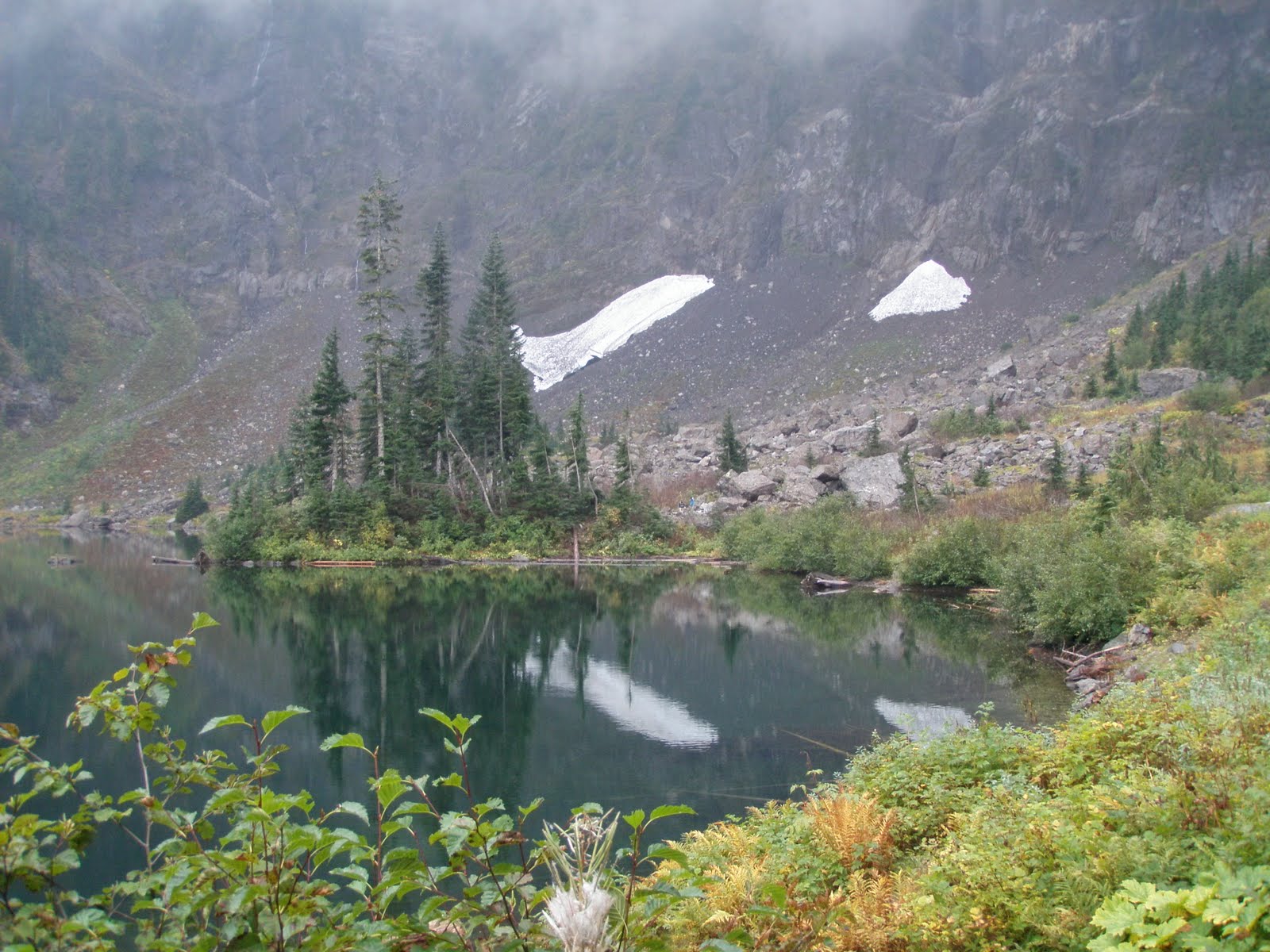
Rainy Lake, North Cascades


Penstemon rupicola grows along clinging grasses on Tiger Mountain, outside of Seattle.
Pen. rupicola closeup.
Same character, living up to its name. (rupicola: rock dweller)
A "cascade" style bonsai is totally put to shame by Nature.


Probably Lewisia columbiana;
just enjoy its radial rosettes of sweet joy popping out of soil-filled rock cracks.

and, I should like to think this is Pen. davidsonii, which was the plant that got me started on this year-long-adventure-gone-mad. (I started out this spring going to UBC's garden to see a specimen I'd seen pictured.) A nice full-circle.


Larix lyallii, according to distribution maps.

The Cascades as seen from a hike to Blue Lake.

Lake 22, a fair drive outside of Seattle.

Phyllodoce sp. with an errant bloom in autumn.

Campfire sparks

Wednesday, November 10, 2010

Revisiting British-Columbian Rock Gardens

Abkhazi Garden, a historic private garden, now under the BC land conservancy. An excellent rock garden and general Rhododendron-et cetera path that makes use of (and respects) a natural outcrop of Vancouver-Island rocks.

Abkhazi has a respectable collection of plants for the plant nuts, too. Mmm, the sweetness fo good design.

The Rock Garden in Beacon Hill Park. A gentle collection of plants on a slope that hugs a natural rocky outcrop and genuine Garry-oak stand.  True, the oaks shade it and limit the material possible.  But it is a peaceful place.
Looking at all these rockeries makes me realise that I like the rock-intensive crevice style better than the plant-rock plant-rock plant-rock style.  We all accidentally fall into the trap at one time or another (or another and another and another, in my case) of putting rocks and plants spread evenly over the surface. This is especially regrettable when a good topography is present. I don't even know how often I've caught myself doing this- now I have developed a complex that makes me allergically hyper-sensitive.
 Even-ness in design and overabundance of pattern will flatten the effect and experience of the different elements, which are, in this case, rocks and plants.  A professor from art school, my god of composition, used to say "Even cancels out. Like equal sides of an equation- each becomes zero."  My friend Gordon says that this effect, so common in garden design, was once called the "Plum pudding effect" by Reginald Farrer, early British Rock Garden Author. No one knows what plum pudding is anymore, so I guess the design problem has gone unchequed...

{Update/Correction: Mr. Farrer's exact words were "The Plum-bun System," or, with spike shaped rocks "The Almond-pudding System," in contrast to "A More Tolerable" rock arrangement as he put it...}
It is important to resolve this because most viewers, people who are not plant collectors, will suffer the most from this effect because they are not distracted by the selection of plants. The solution is to exaggerate natural spaces, use varying sizes of rocks and plants, clump some and spread some, and maybe even leave some open ("negative") space. It takes great guts to do the latter- so few do.


The crevice garden nearby (still in Beacon Hill Park).  Like childen: It's little but important.


Rex Murfett showing off a fine S. longifolia in his Authoritative Saxifrage Collection in Victoria, BC.

Ahh, a nice big, hulking (and artistic) Zdenek Zvolanek/Paul Spriggs design at Paul's garden.
I sat and studied this design for some time and have figured out some of its mysteries. There might be a blog about that when I have nothing better but rock blather to write this winter.


A nice Salix magnifica at Gordon's Alba Plants.

Tide pool detail on the coast of Victoria town.

Tuesday, November 9, 2010

Nature on the Front Range


In the exploration of nature along the front range: Roxborough State Park, Southwest of Denver. I got a tip to go here by stalking Mr. Kelaidis on his blog:http://prairiebreak.blogspot.com/


Little Bluestem, Schizachyrium scoparium, now famous in landscaping, growing wild on the Ann U. White Trail near Boulder, Colorado.


My friend's dry garden in Englewood, CO, a few days before the coldness and wetness of winter moved in. I will be new to snowshoeing...